Asian stock markets showed a downward trend on Wednesday (October 16th). Yesterday, the disappointing outlook from ASML, Europe's largest technology company, dragged down chip stocks.
At the same time, the market expects the Federal Reserve to take a moderate path of interest rate cuts, which boosted the dollar. In addition, the quarterly sales of LVMH, the French luxury goods giant, declined, indicating that China's demand for luxury goods is deteriorating, weakening the previously optimistic sentiment about China due to stimulus measures.
The MSCI Asia Pacific stock index excluding Japan fell by 0.31%. The stock markets of Japan, Taiwan, and South Korea fell by 1.7%, 1.2%, and 0.6% respectively, all of which are home to major chip companies.
ASML's customers include TSMC, Samsung, and SK Hynix. The company predicts that sales in 2025 will be lower than expected, even though demand for AI-related chips is surging, but the weakness in other parts of the semiconductor market is longer than expected. At the same time, a Bloomberg News report claimed that U.S. officials are considering setting limits on AI chip export licenses for specific countries, which also affected market sentiment.
Most European stock markets opened lower, with the Euro Stoxx 50 index down 0.84%, the German DAX index down 0.18%, the British FTSE 100 index up 0.49%, and the French CAC 40 index down 0.93%.
It is expected that investors will gradually become anxious before November 5th and lock in profits at high points.
In China, investors are eagerly awaiting specific details of stimulus plans, causing stock market fluctuations. The blue-chip CSI 300 index fell by 0.24%, but Hong Kong's Hang Seng index rose by 0.88%.
Investors will focus on the upcoming press conference in China on Thursday, discussing measures to promote the "stable and healthy" development of the real estate industry.
HSBC strategist Steven Sun pointed out in a report: "We believe that investors should view policy announcements since September 24th as a whole plan, rather than isolated information - the policy shift seems to have taken shape and will continue."US Dollar Rises
On a macro level, investors continue to focus on US interest rates and the constantly changing expectations for rate cuts. Relevant data indicates the resilience of the US economy and a slight increase in inflation.
Traders currently anticipate that the Federal Reserve will cut interest rates by 46 basis points this year. The Fed initiated its easing cycle in September, implementing an aggressive 50 basis point rate cut.
The market expects a 95% chance that the Fed will cut rates by 25 basis points next month, whereas a month ago, investors believed there was a 50% chance of a 50 basis point rate cut.
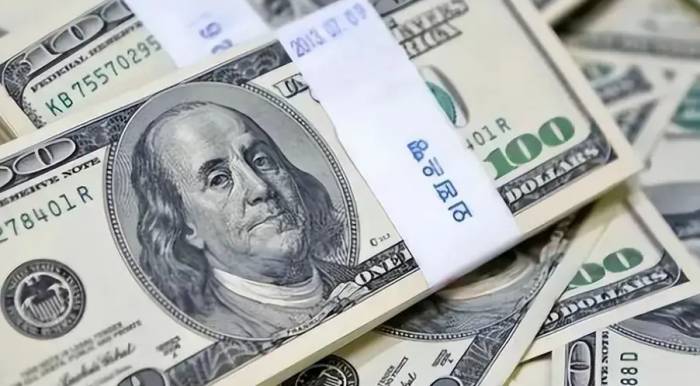
As a result, the US dollar has surged significantly in recent weeks, with the US Dollar Index (a measure of the dollar's performance against major competing currencies) reaching 103.24, nearly the highest level since early August.
The euro fluctuates around a two-month low, trading slightly above $1.0885, with the outlook for the European Central Bank's policy meeting on Thursday still uncertain, and the market widely expects the central bank to cut rates again. Meanwhile, the British pound fell by 0.38% to $1.3025, following data showing that UK inflation in September was lower than expected.
In the commodity sector, oil prices have stabilized after a significant drop in the previous trading session, as investors continue to monitor the tense situation in the Middle East and its potential impact on global supply. Brent crude futures rose by 0.4% to $74.53 per barrel, while US WTI crude futures increased by 0.44% to $70.89 per barrel.

























Comments
Leave a Comment