Preface
"The turning points of history often occur in unexpected places." — This famous saying, much like China's decisive withdrawal from the Philippines' railway project, has attracted global attention.
Why did China withdraw its investment so resolutely? What does this mean for the Philippines, the United States, and Japan? As the situation continues to evolve, the strategic considerations behind this game become increasingly important.
I. Project Background and China's Investment
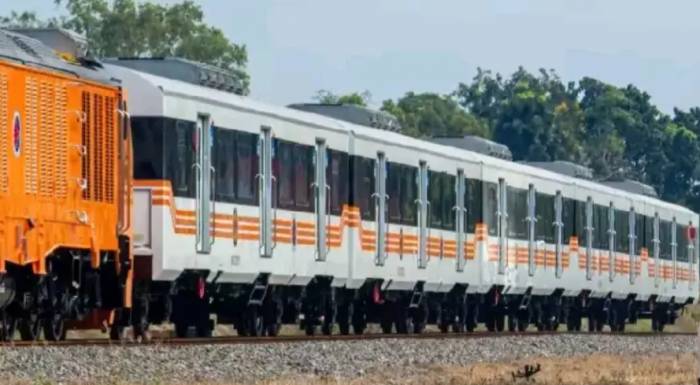
The Subic-Clark Railway Project in the Philippines is far from a simple infrastructure project. It spans 71 kilometers, connecting two of the Philippines' core economic zones: Subic Bay and Clark International Airport.
This railway is not only considered a "flagship project" by the Philippine government but also carries the economic dreams of the entire nation. After all, who wouldn't want their economy to take off with just one railway? China's involvement is the icing on the cake.
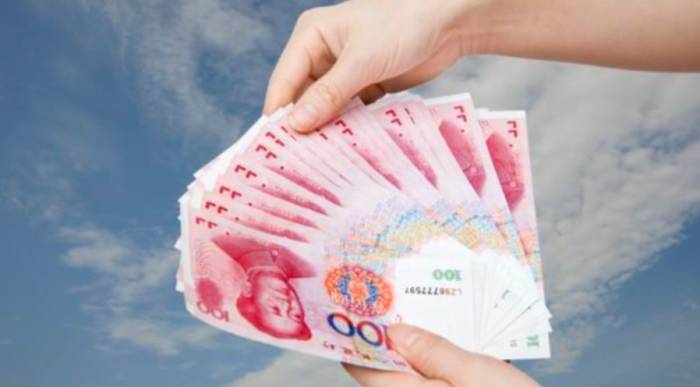
Let's talk about China's investment first. In 2021, China and the Philippines signed a cooperation agreement, confirming that the railway project would be led by Chinese enterprises with an investment amounting to 50 billion Philippine pesos (approximately 6.2 billion RMB). This amount is not small on a global scale, let alone for a developing country like the Philippines.
China's move this time is not just about making money but also about deepening its influence in the Southeast Asia region. After all, whoever controls transportation controls the future. Through this project, China hopes to consolidate its position in the "Belt and Road" initiative and further expand its economic territory in Southeast Asia.
But don't forget, this is not solely about making Philippine goods move faster. There are deeper strategic considerations behind it. Subic Bay, as a natural harbor, is not far from the South China Sea and is a key geopolitical point for China.
Clark International Airport, as an important aviation hub in the Philippines, is one of the core nodes of China-Philippines economic cooperation. Through this project, China not only opens up the transportation lifelines of the Philippines but also enhances its strategic influence in the region.However, the development of events did not follow the initial trajectory; much like a sudden twist in a movie, China invested a significant amount of money in this railway, only to decisively withdraw at the last moment.
This decision truly gave the Philippines a cold sweat, as the sudden disappearance of billions of dollars in investment would make anyone anxious. What's more puzzling is that China had already paved a way to the economic heartland of Southeast Asia; how could they just withdraw like that?
II. The Philippines' Response Strategy
China's sudden withdrawal caught the Philippines off guard. Faced with such a significant change, the Philippine government's first reaction was to "clasp at straws," urgently seeking help from the United States and Japan, hoping they could act as "saviors" to take over this suddenly suspended railway project. However, things were not that simple.
The Philippines' wishful thinking was that the U.S. and Japan would immediately agree to cooperate, as they also have many interests in Southeast Asia. But reality was a bit bleak, as although the U.S. and Japan spoke well, they did not rush to take action. No one was willing to easily take over, making the Philippines' situation even more awkward.
What's worse, in the process of seeking help from the U.S. and Japan, the Philippines exposed many problems. First, their economic structure was overly dependent on external funding, and once external support was problematic, the Philippines' own financial strength was simply unable to support such a major project.
Moreover, the Philippine government's response seemed somewhat panicked, lacking long-term planning and response strategies. This "treat the symptom, not the cause" approach not only failed to solve the problem but also made the situation more complicated.
III. The Strategic Considerations of the U.S. and Japan
For the United States and Japan, taking over the Philippine railway project is not a simple business deal; it's more like a "hot potato." They each have their own meticulous calculations, and whether to take over or not requires careful consideration.
As the global "big brother," the U.S. has many interests in Southeast Asia. Taking over the Philippine railway project, on the surface, seems like a good opportunity to court allies and further consolidate its military and economic presence in the region.However, the question remains whether this railway can actually make money for the United States, which is a big question mark. After all, building railways is not the same as fighting a war; it cannot be driven solely by passion and slogans. Even if this railway is completed, it would be difficult for the United States to gain any substantial benefits from it. At most, it could be seen as a gesture of goodwill towards the Philippines. Moreover, American funds have already been dispersed to other regions and projects. If the U.S. were to invest more money in the Philippines, it might not even pass the congressional approval.
Let's talk about Japan. For Japan, promoting its own Shinkansen technology has always been a "pet project," because if Japan could take over the railway project in the Philippines, it would undoubtedly be an excellent opportunity for international promotion. However, Japan's current situation is not optimistic. On one hand, there is international pressure from the controversy over nuclear wastewater discharge, and on the other hand, there is an economic predicament caused by the continuous devaluation of the yen. Furthermore, Japan has suffered losses in high-speed rail projects in Vietnam and India in the past. The north-south high-speed rail in Vietnam has not made any progress, and India's high-speed rail has only managed to build 10 kilometers in five years. If the Philippine project is handed over to Japan, it could also turn into a mess.
Overall, although the United States and Japan have shown interest in the Philippine project, the likelihood of them actually investing and taking over is not high. This project seems more like a trap for them: not taking it might lead to a loss of influence in Southeast Asia, but taking it could result in significant losses, leaving them with nothing. The Philippines' position in this gamble seems to be becoming increasingly awkward.
IV. Changes in the Investment Environment
China's decisive withdrawal of investment has shattered the calm of the Philippine economy. This has not only halted the Philippine railway project but also raised doubts about the trustworthiness of its investment environment in the international community. Investors fear uncertainty the most, and China's sudden withdrawal has hit this "nerve." As this event continues to ferment, the image of the Philippines in the eyes of international investors has taken a sharp turn for the worse.
The Philippines was originally considered an emerging economy in Southeast Asia, attracting a large amount of foreign direct investment, especially in infrastructure construction. However, China's withdrawal has made many potential investors hesitate. If even a "super player" like China chooses to withdraw, how can other countries and enterprises not be cautious?The credibility of the Philippine government has also been affected, and for businesses that have already invested or are considering investing, the stability and enforceability of government policies are key factors.
In this situation, the Philippines must act quickly to repair its image in the international community. This requires not only the government to introduce more transparent and stable policies but also to strengthen cooperation with other countries, especially in ensuring the stability of projects and the security of funds.
However, the question is, can improving the investment environment alone turn the tide? Faced with stagnant projects and an increasing number of questioning voices, what will the future development of the Philippine economy be like?
Conclusion
China's decisive withdrawal of investment has brought an unexpected predicament to the Philippines. Whether the Philippines can find a new way out in this international game in the future will determine the direction of its economic development. As the old saying goes, "There are always opportunities in crises." The future path of the Philippines still depends on itself.



























Comments
Leave a Comment