Introduction
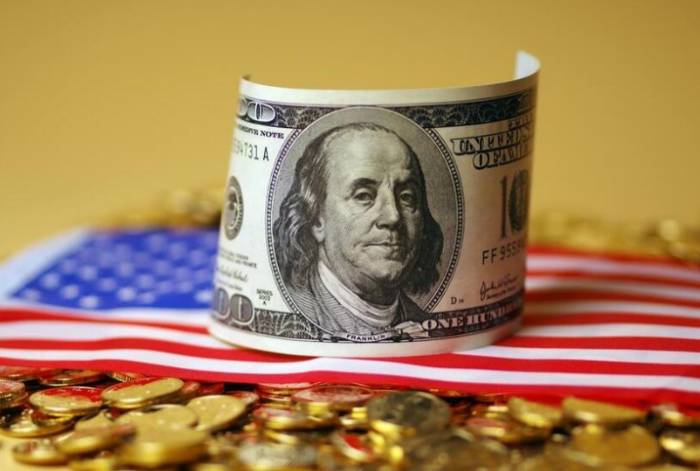
The Federal Reserve has finally acknowledged that the excessive issuance of dollars in their hands has led to severe consequences.
Due to the Fed's aggressive "money printing," the inflation rate in the United States has reached a historical high of 9.1%, and it has also triggered inflationary phenomena worldwide.
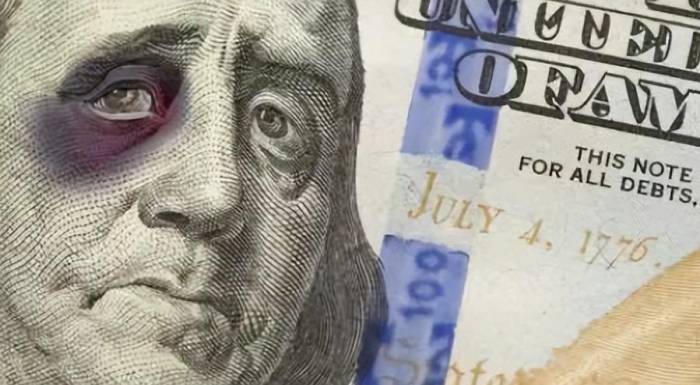
Now the Federal Reserve is still smilingly bearing a huge loss of $200 billion.
The Fed had hoped that massive money printing could speed up the recovery of the U.S. economy, but the result of the money printing turned out to be a "flood," and even the United States could not withdraw unscathed.
At the same time, the Fed's "money printing" this time has also caused severe global inflation, and inflation is the number one cause of national economic collapse.
The inflation within this country will also affect the economies of other countries, creating a chain reaction.
Which giant companies thought they could make a fortune but ended up losing $200 billion?
The Fed's "money printing" failed to harvest the world.
During the outbreak of the COVID-19 pandemic in 2020, countries were affected to varying degrees.Due to the highly infectious nature of the COVID-19 pandemic, it has not only caused certain harm to human health but also had a significant impact on economic development. Countries have implemented lockdowns in response to the pandemic, which has disrupted the process of international trade. The United States and Europe have been the most severely affected by the pandemic, primarily because they failed to implement effective control measures after its outbreak, allowing the virus to spread rampantly within their borders. This has not only threatened the safety of people's lives but also caused great harm to the economy.
In order to stabilize the economies of the United States and Europe as soon as possible, the Federal Reserve and the U.S. Department of the Treasury have initiated large-scale economic stimulus plans, enabling outstanding enterprises and even individuals in both regions to engage in financing and loan models. At the same time, they have strengthened the management of liquidity in the financial market, enhancing market liquidity.
The U.S. government's "bailout" actions in the capital market are equivalent to the official release of a massive amount of U.S. dollars into the global financial market, which is tantamount to opening a door for economic recovery for the U.S. government. After entering the recovery period in 2021, the United States has successively implemented several rounds of large-scale stimulus policies, which are destined to push up both the supply and demand sides.
These policies have also stimulated consumers' willingness to consume, promoting the economy to recover more quickly to the state before the pandemic. After the end of the pandemic in the United States, in order to maintain the momentum of economic recovery, the Federal Reserve continued to issue "pass" for various rescues provided by the U.S. government. At the same time, the rescue originally given to U.S. domestic enterprises was upgraded and expanded to U.S. enterprises in other countries.
This rescue is no longer the previous U.S. cash but allows enterprises in the United States and Europe to directly obtain the green card of U.S. debt. For them, this kind of bond, which has no interest and can even apply for exemption, undoubtedly greatly enhances the willingness to invest.After all, this round of U.S. debt policy is equivalent to the United States directly distributing aid to the hands of enterprises in the United States, Europe, and other countries, allowing them to move more smoothly on the path of assistance.
At the same time, this round of U.S. debt has also made the United States and European countries highly dependent on U.S. debt, and the Federal Reserve has also gained a lot of dollar inflow through this.
In this way, the Federal Reserve not only obtained a large amount of dollar cash flow, but also released a huge amount of dollars. At the same time, it also shifted the burden of inflation to other countries.
The Federal Reserve thought that it could achieve the goal of making a fortune through this method, but it did not expect that inflation would not only be transmitted between the United States and Europe, but also affect our country while the Federal Reserve transferred it to other countries.
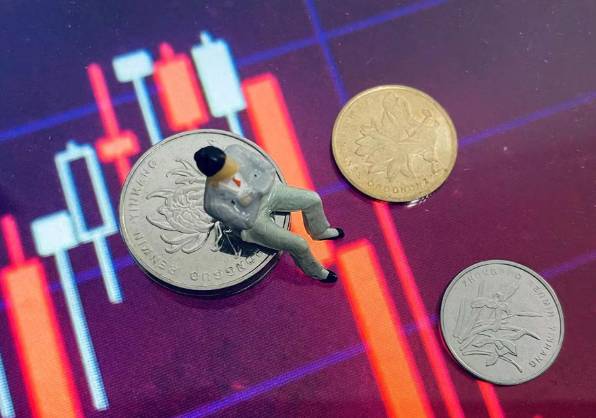
It caused a huge loss of 200 billion dollars.
The "watering" behavior of the Federal Reserve not only did not achieve the goal of making a fortune, but also brought huge economic pressure to itself.
This is mainly because the dollar, as the world's currency, has a great impact on other countries.
Countries are heavily dependent on the dollar, and there are a large number of trade transactions settled in dollars every year.
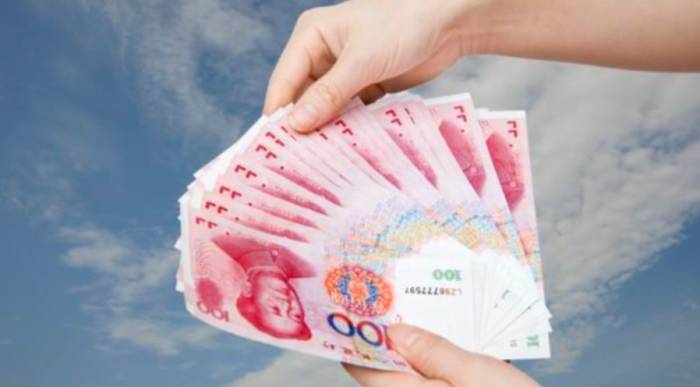
After the Federal Reserve released a large amount of dollars, other countries quickly absorbed these dollars, and a wave of dollar business was set off in the country, and even the exchange rate between the yuan and the dollar rose a lot.
And the rising dollars in the country also promoted the domestic consumer market, even pushing China's inflation rate to the highest 2.1%.As inflation in our country rises, the actions of the Federal Reserve have also caused our country's inflation to exceed 2.1%.
Inflation directly affects the living standards of the people in society. The rise in inflation in our country makes it even more difficult to ensure the living standards of the people.
Generally speaking, controlling the inflation rate within a range of about 2% is more appropriate, which will not affect the living standards of the people while also ensuring the high-quality development of the country's economy.
Moreover, controlling inflation below 3% will not cause prices to soar, and the living standards of the people will remain at a relatively high level.
However, the inflation in our country has risen to 2.7%, which means that the living standards of our people are decreasing rapidly.
Our country has maintained the value of the yuan in the best possible state, and the Federal Reserve's "money printing" behavior has also accelerated the devaluation of the dollar. It was thought that the behavior of harvesting the world would end up in a difficult situation to clean up.
The Federal Reserve is shortsighted, thinking that this method could achieve harvesting, but unexpected situations have occurred, and the Federal Reserve has also lost the ability to control the situation. Until now, the Federal Reserve is still paying the price for this "money printing."
Global de-dollarization.
It is difficult to always be a "harvester" of the global economy, because when the United States prints a large amount of dollars, the reactions of countries around the world have already had certain results.
The Federal Reserve's "money printing" behavior has also caused the value of the dollar to plummet directly, and the devaluation of the dollar will to some extent promote countries to abandon the dollar and look for better settlement methods.In the recent "quantitative easing" actions by the Federal Reserve, we can also see that the United States' ability to maintain a stable situation is very fragile, and it could even lead to a chain reaction that could cause an economic collapse at any time.
Due to the deep dependence of various countries on the US dollar, the United States has been in a state of "reaping benefits without effort" for so many years. On the one hand, it provides opportunities for other countries to prosper, and on the other hand, it also keeps its own dollar in a stable state.
However, the huge leverage formed invisibly, we cannot always suppress it. As long as one country also starts to "quantitatively ease," that country will harvest dollars from various countries, which will inevitably lead to the loss of dollars within the United States.
Even due to the deepening dependence of various countries on the dollar, the situation will become more fragile. The stronger the dependence on the dollar, the more serious the impact will be once a shock occurs.
Therefore, the world's dependence on the dollar is becoming stronger and stronger, but at the same time, more and more countries are joining in the resistance to the dollar, which is the process of "de-dollarization."
This trend is quietly rising on a global scale, and the voices of various countries resisting the dollar are getting higher and higher.
The trend of de-dollarization is not only conducive to the independent development of the global economy, breaking free from US control, but it will also make the world economy more diversified.
As our country's Ministry of Foreign Affairs said: "The future world will not be an era of a single currency, but an era of diversified coexistence."
This statement seems far-fetched, but it is already quietly underway. The trend of de-dollarization adjusts the pattern of countries to a multipolar pattern.
Its significance is not only to change the global economic order but also to help the global economy achieve a higher level of sustainable development.Conclusion
The Federal Reserve's policy missteps have directly led to substantial losses, and such errors have also brought the living standards of our country's people closer to decline.
The global trend of de-dollarization has not only changed the global situation but may also affect the new economic order, ushering in a more multipolar order in the future.
Therefore, it is best to actively participate rather than cater to it.
















Comments
Leave a Comment