According to data released by S&P Global, the preliminary value of the US Markit manufacturing PMI in August was 48, marking an eight-month low and lower than the expected 49.5. The slowdown in the growth of US manufacturing has sparked market concerns about an economic recession, thereby increasing expectations for a Federal Reserve rate cut this year.
Recently, the minutes of the Federal Reserve's July monetary policy meeting also indicated that if economic data such as inflation continue to develop as expected, the Federal Reserve may cut interest rates at the September interest rate meeting. The latest data from the Chicago Mercantile Exchange's Federal Reserve Watch Tool shows that as of the evening of the 21st, the probability of the Federal Reserve cutting rates by 25 basis points in September has reached 65%, and the probability of cutting rates by 50 basis points has reached 35%.
Benefiting from this, institutions have a generally positive outlook on the subsequent trend of non-ferrous metals.
Nickel, as a relatively weak performing non-ferrous commodity in recent years, is currently in a period of bottoming out and fluctuating. For companies in the nickel industry chain, this is also a time when their fundamentals are expected to undergo significant changes, especially those that can demonstrate sufficient resilience during industry pressures, and are likely to show high performance elasticity first when the industry returns to an upward cycle.
As a nickel producer with a full industry chain layout that is extremely scarce in the Hong Kong stock market, Licheng Resources is precisely such a resilient example.
In the first half of this year, the company achieved a revenue of 10.878 billion yuan, a year-on-year increase of 17.2%; the net profit attributable to the parent company reached 587 million yuan, a year-on-year increase of 73.5%. It is not easy to achieve such results against the backdrop of low industry prosperity. If we look at a longer time dimension, the growth potential of Licheng Resources is actually clearer.
I. Looking at the company's certainty from industry changes
Since the historical high in 2022, nickel prices have continued to fluctuate and fall, influenced by both the slowdown in the growth of the world's major economies and the oversupply caused by producers' frantic expansion due to high prices in the early stage.
For the entire nickel industry chain, the past two years have indeed not been good years.As the supply and demand relationship continues to improve, despite the industry as a whole still facing a phase of oversupply, the further downward space for nickel prices is limited due to strong cost support.
Cost pressures have already led many manufacturers to reduce production. According to data from Minmetals Futures Research Report, in the second quarter of 2024, the output of 14 major overseas nickel producers was 22.3 metal tons, and it is expected that the nickel metal output for the whole year of 2024 will be 740,000 metal tons, a decrease of 5.2% year-on-year.
Among the manufacturers reducing production, there are no shortage of top-tier manufacturers. It is reported that Glencore's joint venture in New Caledonia, Koniambo Nickel SAS (KNS), did not make a profit last year and has transitioned to maintenance and maintenance phase in February this year; BHP announced that it will cease the business of Western Australian Nickel Company from October this year, and the development of Kwinana nickel refinery, Kalgoorlie nickel smelter, Mt Keith and Leinster mining and processing operations, and the West Mosgrave project has been suspended.
The reduction in production by top-tier manufacturers is beneficial to the improvement of the supply and demand relationship and has a direct supporting effect on prices. More importantly, it symbolizes that the vast majority of manufacturers in the industry are on the edge of the cost line, or even operating at a loss. As capacity continues to clear, it will become a high probability event that the industry's supply and demand fundamentals will continue to improve on the margin.
Fitch even gave a forecast that after 2024, nickel prices will rise steadily, reaching $21,500/ton by 2028.
From a global capacity pattern change perspective, Indonesia's low-cost capacity can benefit more from this wave of industry supply clearing. Xingye Futures Research Report pointed out that, backed by Indonesia's high-quality laterite nickel ore resources, Indonesia's new capacity is basically located at the 25%-75% percentile level of the cost curve, and there is still motivation to produce at the current price.
Li Qin Resources' capacity is mainly distributed in the Indonesian region, with a prominent cost advantage.
For example, its HPAL project is the nickel-cobalt compound production project with the lowest cash cost. On the one hand, Li Qin Resources has signed a 20-year supply agreement with strategic partner Halida, and the raw material supply price follows the official guidance price of Indonesia. The location of the mining raw materials and the smelting factory are both on Obi Island, and the transportation cost is relatively low. On the other hand, the company uses high-quality mineral raw materials, with a relatively reasonable nickel content and lower magnesium content, which reduces the acid consumption and further lowers the project cost.
For the Indonesian government, abundant nickel ore resources are the key to achieving economic rise. With the advantageous position in the nickel industry chain, Indonesia has implemented a "downstream" resource economic policy in recent years, aiming to form a high-added-value industrial ecosystem in the country and avoid over-reliance on natural resources.
Li Qin Resources, as a rare full-industry-chain nickel service provider, covers multiple links such as nickel ore trade, maritime transportation, smelting, and equipment manufacturing. It is exactly the indispensable external support for the Indonesian government to build an industrial ecosystem, which is also the core reason why Li Qin Resources can get widespread support in Indonesia.From this perspective, as global production capacity increasingly concentrates in the Indonesian region, Licheng Resources can enjoy the benefits of structural growth in the nickel industry chain, and the certainty of future performance growth also increases accordingly.
II. "Pyrometallurgical + Hydrometallurgical" Enhances the Certainty of Growth
From a technical standpoint, both pyrometallurgical and hydrometallurgical processes have their respective roles in the current nickel industry chain. Licheng Resources, by walking on both legs, is more stable, relying on the dual driving force of "pyrometallurgical + hydrometallurgical" processes, which gives Licheng Resources a distinct "bottom guaranteed, top elastic" characteristic.
1) Pyrometallurgy stabilizes the basic plate
Generally speaking, pyrometallurgical smelting is mainly applied in scenarios such as stainless steel. The demand for stainless steel is highly correlated with the macroeconomic trend. With a series of policies aimed at stabilizing growth, the recovery trend of China's macroeconomy is gradually emerging. In the first half of the year, China's GDP grew by 5.0% year-on-year, showing overall stability.
In particular, the fixed investment is worth noting. Although the national fixed asset investment grew by only 3.9% year-on-year, excluding real estate development investment, this figure will rise to 8.5%. Behind this is the continuous effort of infrastructure and manufacturing investment, which grew by 5.4% and 9.5% respectively.
This provides a good environment for the increased demand for basic materials such as stainless steel. From January to June 2024, the national output of stainless steel crude steel was 18.75 million tons, a year-on-year increase of 5.88%; during the same period, the national apparent consumption of stainless steel reached 15.6875 million tons, a year-on-year increase of 5.82%.
With the continuous intensification of policies such as scale equipment renewal and consumer product replacement, as well as the issuance of ultra-long-term special treasury bonds, the demand for stainless steel should be further increased, thereby driving the demand for pyrometallurgical processes.
However, the environmental flaws brought by the pyrometallurgical process itself cannot be ignored. At the same time, pyrometallurgical processes often require ore nickel grades above 1.5%, which exacerbates the government's concerns about the depletion of high-grade nickel ore resources. This has led to major nickel-producing countries such as Indonesia restricting the further expansion of pyrometallurgical processes.
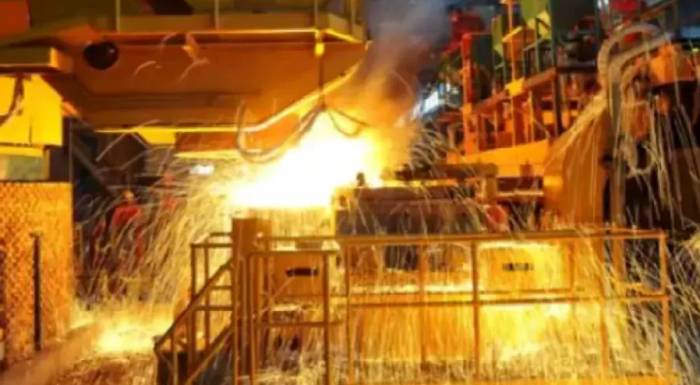
Correspondingly, this also increases the value of Licheng Resources' existing pyrometallurgical assets.In order to further achieve the goal of cost reduction and efficiency enhancement, Liqin Resources, leveraging its technological strengths, has proposed an innovative solution. By improving the process, it has increased the utilization rate of thermal energy and pioneered the high-platform drying kiln in the industry, thereby reducing production costs and energy consumption, with a capacity utilization rate that leads the industry.
At present, Liqin Resources has 3 RKEF production lines in Suqian, China, with an annual production capacity of up to 18,000 metric tons of nickel iron. Meanwhile, the company has fully commissioned the first phase of the RKEF project on Obi Island, which consists of 8 production lines. The second phase of the RKEF project, with 12 production lines, is also progressing according to plan. If all the second-phase production lines are commissioned on schedule, the company will have a designed annual production capacity of 185,000 metric tons of nickel iron.
2) Hydrometallurgy opens up new possibilities
From the perspective of growth rate, the main driving force behind nickel demand comes from new energy vehicles.
According to data from the Passenger Car Market Information Joint Committee, the retail sales volume of new energy passenger cars in China in July this year was 878,000 units, a year-on-year increase of 36.9%. The penetration rate has also broken through the 50% mark, reaching 51.1%, which is an increase of 15 percentage points compared to the same period last year.
For consumers, range anxiety has always been an important factor affecting their purchase decisions on new energy vehicles, which in turn forces manufacturers to increase the production of high-energy-density batteries, thereby driving the demand for high-nickel batteries.
The main application scenario for the products produced by Liqin Resources' hydrometallurgical process is the power batteries of new energy vehicles. The company is also one of the few manufacturers that have mastered the high-pressure acid leaching process for laterite nickel ore, highlighting its scarcity.
The hydrometallurgical technology used by Liqin Resources has achieved selective leaching of nickel and cobalt, with most of the impurities such as iron and aluminum remaining in the slag, ensuring the recovery of valuable metals and reducing material consumption. At the same time, this technology can handle low-grade nickel ores, which can provide more sustainable performance support for the company against the backdrop of increasingly scarce high-grade nickel ore resources.
Currently, all three production lines of Liqin Resources' HPL project (HPAL project phases I and II) have achieved and exceeded production targets. In March of this year, the ONC ore dressing system of Liqin Resources' HPAL project phase III was successfully fed, marking a phased achievement of the project. The project has gradually transitioned from the construction phase to the trial production phase.
It is reported that the project has planned three production lines with an annual designed capacity of 65,000 metric tons of nickel-cobalt compounds. Once fully operational, the overall expected capacity of Liqin's HPAL project is expected to reach 120,000 metric tons of nickel-cobalt compounds.III. Conclusion
Everything has cycles, and non-ferrous metals are no exception.
For investors, entering at the bottom of a cycle can undoubtedly yield substantial returns. However, the probability of entering at the absolute lowest point is truly minuscule. It is essential to recognize that the true bottom is not a single point but rather a range.
Just as with the current position of the nickel industry chain, it is difficult to estimate how long the bottoming process will take. Companies like Licheng Resources, which can achieve steady growth at the bottom of the cycle, often lead the industry in subsequent performance. The market needs to have more patience.























Comments
Leave a Comment