
I grow vegetables on a 3.5m x 4m plot — smaller than most people's patio. For years, I ignored crop rotation for small gardens because every guide assumed raised beds the size of a tennis court.
Then blight wiped out my tomatoes two summers in a row. That's when I built a rotation plan that fits a tiny space. It's not textbook. But it works.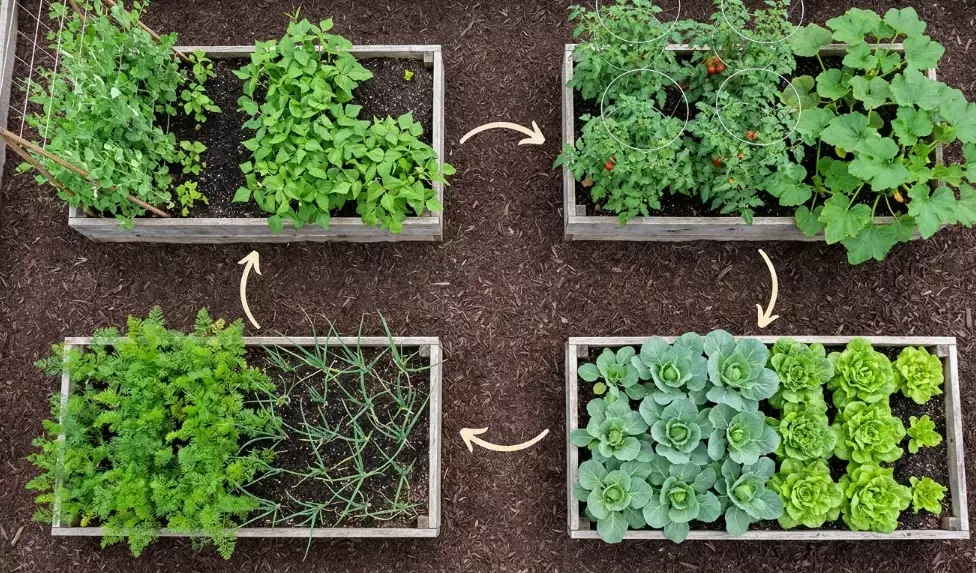
What's in this guide (skip to what you need)
Why Small Gardens Need Rotation (Even 4 Beds)
Soil-borne diseases like clubroot and white rot don't care about your garden size. They build up when the same plant family grows in the same spot.
I learned this the hard way with onions. Three years in the same bed gave me white rot — a fungus that lives in soil for up to 15 years. No fungicide fixes it. You just wait.
Rotation breaks that cycle. Pests emerge in spring expecting their host plant. Move the host, and they starve or move on.
There's a second benefit most people miss: nutrient balance. Heavy feeders like brassicas drain nitrogen. Legumes put it back. Rotating spreads the load so you're not dumping compost into the same tired bed every year.
My take: A 4-bed rotation on a small plot isn't perfect. Pests can still walk from bed to bed. But it cuts disease pressure enough that I haven't lost a tomato crop since 2021.
My 4-Bed Rotation Plan for Small Spaces
Here's the layout I settled on after three seasons of trial and error. Each bed is roughly 1m x 2.5m — about the size of a single mattress.
I rotate clockwise each year. Bed A becomes Bed B, B becomes C, C becomes D, D becomes A.
| Bed | Year 1 | Year 2 | Year 3 | Year 4 |
|---|---|---|---|---|
| Bed A | Legumes (peas, beans) | Brassicas (cabbage, kale) | Roots (carrots, beets) | Potatoes |
| Bed B | Brassicas | Roots | Potatoes | Legumes |
| Bed C | Roots | Potatoes | Legumes | Brassicas |
| Bed D | Potatoes | Legumes | Brassicas | Roots |
Why this order? Legumes fix nitrogen. Brassicas love nitrogen. Roots follow brassicas because they don't need much — they just need loose soil that brassicas leave behind after deep rooting. Potatoes go last because they break up heavy soil and tolerate lower fertility.
I keep a simple paper map. Every January, I redraw it. No app, no spreadsheet. Just a pencil and the back of an envelope.
The Vegetable Family Rotation Chart I Use
You can't rotate what you can't group. Here's the cheat sheet stuck to my shed wall.
| Family | Members | Why Rotate |
|---|---|---|
| Legumes | Peas, beans, clover | Fix nitrogen; avoid replanting where they grew to prevent root rot |
| Brassicas | Cabbage, kale, broccoli, radish | Clubroot stays in soil 20 years; never follow brassicas with brassicas |
| Roots | Carrots, beets, parsnips | Carrot fly larvae overwinter in soil; rotation starves them |
| Potatoes | Potatoes, tomatoes (same family) | Blight spores survive in soil; keep tomatoes far from last year's potatoes |
One thing nobody told me: tomatoes and potatoes are both nightshades. I used to plant tomatoes where potatoes grew the year before — bad move. Early blight hit hard. Now they're in separate parts of the rotation, two years apart minimum.
Watch out: If you grow in containers, rotation still matters. I empty and swap potting mix every two years. Damping-off fungi build up in reused soil like clockwork.
Common Mistakes in Small Garden Rotation
These are the traps I fell into — and that I see other small-space growers hit over and over.
- Rotating by plant, not family. Moving cabbage to a bed that had kale last year does nothing. They're the same family, same pests.
- Forgetting vertical space. My beans climb. My brassicas don't. I rotate the trellis too, not just the soil. Otherwise bean rust spores splatter the same spot each season.
- Treating herbs as filler. Parsley and celery share family with carrots. I planted parsley next to carrots for three years running. Carrot fly found both. Now parsley goes in the legume bed.
- Ignoring green manures. Bare soil in winter loses structure. I sow field beans in November on any empty bed — they fix nitrogen and die back in spring. No digging needed.
Small plots make rotation feel impossible because you can't give each family a whole season alone. You can still move families in blocks. That's enough to disrupt disease cycles.
Quick Answers to Real Questions
My garden is tiny — can I rotate with only two beds?
Two beds work if you split each bed in half. Rotate legumes and brassicas on one side, roots and potatoes on the other. Swap sides each year. It's not perfect, but it beats growing tomatoes in the same soil forever. I did this for two seasons before expanding to four beds.
Does crop rotation actually help with slugs and snails in a small garden?
Not much. Slugs travel. Rotation helps with soil-borne diseases and root pests like carrot fly. For slugs, I use beer traps and copper tape — rotation won't save you there. Be honest with yourself about what rotation can and can't do.
What if I only grow tomatoes and peppers in containers?
Refresh the top 10cm of compost every year and swap container positions. Peppers and tomatoes are both nightshades, so they share blight risk. If you can't rotate, buy blight-resistant varieties like 'Crimson Crush' — that's what I grow now on my patio.
Can I skip rotation for perennial vegetables like rhubarb or asparagus?
Yes. Perennials stay put. They're the exception. Just don't plant annuals from the same family right next to them — asparagus beetles and rhubarb crown rot spread slowly but surely. Give perennials a permanent corner and rotate everything else around them.
This article was fact-checked against guidance from the Royal Horticultural Society on clubroot and white rot life cycles.

Leave a Comment